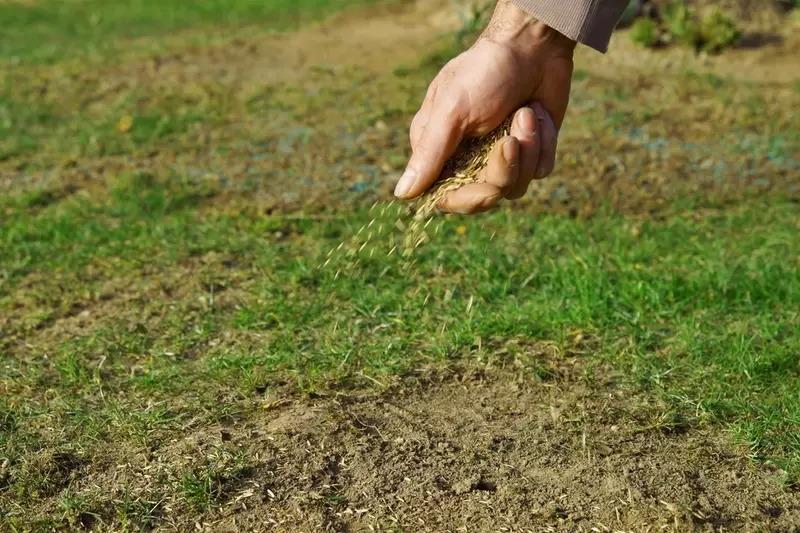
This how and when to overseed your lawn guide will ensure you have a lawn in good shape, knowing when the right time is to seed and look after your green grass. If you are wondering what overseeding is – it is a technique where seeds are sown into an existing lawn. Depending on the size of your property, the time it takes to overseed can vary, but it’s known to be an excellent way of growing a healthy lawn without weeds. Overseeding also means you’ll be growing your lawn without the use of chemicals.
🌟 The Ultimate Autumn Overseeding Bundle
Achieve a dense, professional finish. Grab everything you need to successfully restore your lawn this season in one go:
Why overseed your lawn
You might notice your lawn growing thinly over the years and patchy in places, allowing weeds to grow in the bare areas. Overseeding is perfect for these areas but can also be used to thicken up most areas of the lawn. A thick, healthy lawn is also naturally more resistant to weeds, drought, and disease – saving you time and effort in the long run.
When to overseed your lawn
The ideal times to overseed lawns are in springtime from March to early May, and then late summer into early autumn from the end of August into September. Autumn is by far the best time to overseed and try not to do this, however much you are tempted, in the summer time. If you overseed in high heat, you’ll most likely be wasting your time and resources. So avoid overseeding during hot summer days, and choose a colder day instead. Don't forget to follow up your autumn seeding with an Autumn Lawn Treatment to prepare the roots for winter.
How to overseed your lawn
- Start by removing weeds and any fallen leaves or anything else in the way. You can also use a scarifier to remove moss if needed.
- Mow the lawn on a low setting and remove all clippings.
- Aerate your soil by forking holes into the lawn and adding a thin dressing layer over the area to be seeded. A quality Top Soil makes an excellent topdressing – improving seed-to-soil contact for faster germination.
- Sow your seeds as per the packet instructions and lightly rake to ensure the seeds are in contact with the soil. For a luxurious, hard-wearing finish, we highly recommend the Green Velvet Lawn Seed.
- Lightly press down, walk or pat the area.
How to care for your overseeded lawn
You will need to make sure the grass seeds don’t completely dry out. They need moisture to survive. Water with a fine rose fitting to ensure the seeds don’t get washed away by too much pressure, and keep moist to ensure the seeds germinate. Your lawn will need mowing, but start low in spring and raise the setting. For newly sown seeds, make sure the grass is at least 5cm to 8cm before you cut on a high setting.
Choosing the right grass seed for your garden
Not all lawns are the same, and choosing the right seed for your specific conditions makes a real difference to the end result. Here’s a quick guide to help you pick the best match:
- General-purpose & luxury lawns: For most Irish gardens, a premium mix covers all the bases. The Green Velvet Lawn Seed is a superb blend ideal for new lawns and overseeding alike, giving you that rich, dense aesthetic.
- Faster results and earlier sowing: If you want to seed early in the year or are after quicker establishment, opt for a fast-acting variety. The Gro-Sure Fast Acting Lawn Seed germinates from as low as 7°C, making it perfect for early spring or late autumn projects.
- Shady gardens: Grass under trees or in shaded corners is one of the most common challenges. Standard seed mixes struggle in low light, so look for a seed specifically blended for shade – such as Johnsons Shady Lawn.
Repairing pet damage and worn patches
Dogs and cats are wonderful, but they can be tough on a lawn. Urine scorch from dogs causes yellow or brown dead patches, while digging, running, and general activity creates worn tracks over time. The good news is these patches are very straightforward to repair.
For yellowing caused by pet urine, water the affected area thoroughly as soon as you notice it – diluting the nitrogen concentration in the soil is key to preventing permanent damage. Once the patch has died back, fork it over lightly to break up the surface, apply a thin layer of premium top soil and reseed.
Keeping on top of lawn care year-round
Keeping a nice lawn is one of gardening’s great pleasures, and it doesn’t have to be as hard as it looks. Overseeding will definitely help to keep it thick and green, but combining it with a regular feeding programme makes the biggest difference over time. A well-fed lawn crowds out weeds naturally, meaning less intervention is needed throughout the year.
Ready to get started?
Visit us in store or browse our full range online for grass seed, fertilisers, top soils, spreaders, and all the tools needed for a thriving lawn.